


A Balancing Act: A Conversation with Martin Spann on Values, Technology, and Harnessing Motivation
Written by David Finken, PostDoc at ETH Zurich, Switzerland

In a thoughtful conversation, Martin Spann, the professor of electronic commerce and digital markets at LMU Munich, shares his journey, motivations, and life philosophy on decision-making. With over 25 years of experience, Martin is one of the most prolific scholars and seeks to understand how consumers interact with digital technologies and their implications for marketers. In our conversation, we delved into how to balance intrinsic and extrinsic motivations for maintaining a passion for research, and unpacked academia’s most important p-value—the personal life
So, Martin, what is your secret source of success?
Certainly my family and my wife. Without the support of my wife, this journey would not have been possible. Moving as a couple, the other person has to decide if they want to move or not. My partner's support has been crucial in navigating the demands of an academic career, especially when relocating for job opportunities.
That is wonderful! And I assume one’s family is really a balancing act. Beyond family, what qualities are essential for someone to succeed and remain in academia?
“If you self-select into academia and stay in academia, you need intrinsic motivation to be excited about doing research and having the resilience to overcome challenges,”
– Martin Spann
In my view, intrinsic motivation is essential for a career in academia. The joy of discovering new phenomena and the resilience to overcome challenges are crucial for success. At the same time, extrinsic motivation, such as recognition from others, plays a significant role. Especially, the satisfaction of seeing one’s work published and receiving external acknowledgment have been key drivers for me, and such recognitions not only provide personal fulfillment but also impact the academic community. I believe it is important to have a balance between intrinsic and extrinsic motivations to maintain happiness and productivity in the field.
Do you sometimes get motivated by others?
Of course, interacting with others and working in teams greatly motivates me. So, throughout my career, about every publication—except one or two—is in a team because I like working in teams. This teamwork taught me management skills early on, and although our teams are typically smaller compared to those in natural sciences (where problems are typically much larger), managing our co-authors is an essential skill in our job.
Now you are an established academic, was it always clear for you to become an academic?
I’m an economist by training, so I always think about decreasing marginal returns and so obviously, the less you know, the larger your marginal returns…
Welcome to my world …
Joking aside – certainly, in the beginning, you need to learn a lot. Fortunately, my Ph.D. advisor – Bernd Skiera – supervised my master’s thesis and I got the chance to learn something about academia in the early 2000s. And this was what made me decide to continue, albeit not having planned to do a Ph.D. And, I know many of my academic friends who didn’t have a master plan either. And then in the PhD, I didn’t have a master plan to stay on. I thought, oh yeah, that looks good, promising, I like it, and there is a promising job market.
And your path from there is exceptional and contributions exceed publication by far …
Well, someone else needs to judge whether my path is impressive 😊. Publications are only one side of the coin and, of course, an important one to have a career. Initially, people need to find what they are interested in, and something they really want to work on and compete in. Beyond publications, I have been supervising Ph.D. students for more than two decades and actively engage in editorial responsibilities. For example, I see my role at IJRM as a service to the community and am excited to see a paper moving from a first-round submission to actually being published. That said, I benefited from Associate Editors and the peer reviewing system, so it’s clear to me that this is a service I want to do. And while one can debate the benefits of our peer reviewing; I still believe this is our best system. In this process, I consider myself a moderator and try to facilitate the review process and ensure fair and thorough evaluations.
You mentioned competition before, right?
Being competitive is important as publishing is also about competition, but also a balancing act. For example, if there is a new technological phenomenon, many scholars jump on this phenomenon. But is this really where you want to compete as a scholar? Fifteen research groups work on the same obvious questions. Personally, I concluded, that I won’t be faster than the other ones. So, I always try to understand key value components regarding a topic, what I’m interested in, and what is maybe not super obvious, and then decide and work on this. And of course, it sometimes works better or worse. This has also led me to purposefully skip phenomena.
Do you also use technology in your personal space, for example at home?
“I use technologies where I see a benefit. I like to try out a lot, but I don't have every gadget you can imagine,”
– Martin Spann
Martin’s summarized perspective on researching technologies: Martin approaches new technologies with careful consideration, evaluating their potential impact rather than getting swept up in the initial excitement. “I observe, and then I think, what will this change, and how will it impact us? I’m usually more interested when there’s more observational data and field data on how consumers use it.” In line with this orientation, Martin is selective in using technologies for personal matters. In other words, new technologies must clearly offer him advantages.
Together with his Ph.D. student, Sophie Berghueser, Martin recently published an article on crypto marketing at IJRM. Despite this direction, Martin views blockchain and NFTs with a grain of salt as practical business applications and user benefits are still lacking.
“I’ve been very skeptical because I heard explanations of blockchain for a decade, where people start each presentation with ‘tomorrow everything will be decentralized’,”
– Martin Spann
Martin’s perspective and values have guided him throughout his career and personal life, offering a balanced approach to professional growth and happiness.
Meet the Martin
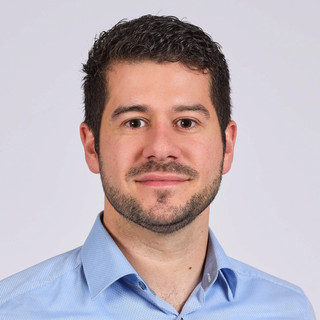
Martin Spann
Martin Spann is a professor of electronic commerce and digital markets at LMU Munich, School of Management.

What are your personal two “Ps” on your academic journey?
The places and the people. I was fortunate enough to move to Frankfurt with Bernd Skiera and to join – what was rather novel for the earlier days – his team studying E-Commerce. Also, I had the chance to work with Gerard Tellis [Jerry and Nancy Neely Chair in American Enterprise, Director of the Center for Global Innovation, University of Southern California] and this certainly helped to get a broader perspective and I would consider my time with him as quite influential.
We talked about secret sources today – what is your secret source to decision-making?
I try to make decisions based on the best information available at the time and then never regret these decisions. Once a decision is made, even if it’s not successful later, I don't dwell on it.
Anyone who you would like to have lunch with if you could pick a random person?
I'd like to have lunch with John von Neumann [a visionary pioneer in quantum physics, game theory, and digital computing among other things] and ask him about his views on AI and its impact on human and strategic decision-making
This article was written by
PostDoc at ETH Zürich, Switzerland


Kabar4d bikin happy!